

In 4-H, STEM programming is about more than just gadgets and gizmos; it’s a deliberate pathway toward career and college readiness. By engaging youth in hands-on challenges, the program helps them develop the “soft skills” and technical literacy required in the modern workforce.
Here is a recap of the two most recent STEM project meetings and the “why” behind the activities.
Meeting 1: Closing the Circuit with Makey Makeys
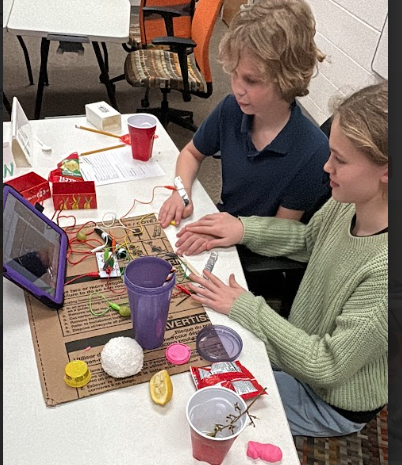
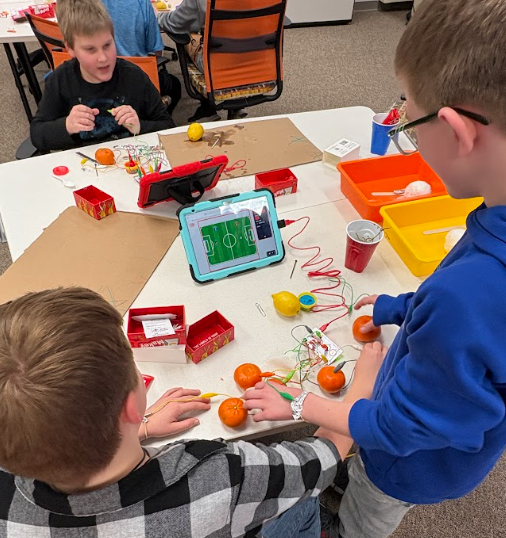
Our first session was an electrifying exploration of circuitry and conductivity. Using Makey Makey kits, our youth transformed the “ordinary” into the “extraordinary.”
By connecting alligator clips from a computer to conductive objects—ranging from bananas and play-dough to their own hands—the kids learned how to complete a circuit. When they touched the fruit, they acted as the switch, sending a signal to the computer to play a piano note or jump in a video game.
- The Career Connection: This wasn’t just fun with fruit; it was an introduction to Electrical Engineering and Human-Computer Interaction (HCI). Youth practiced troubleshooting (finding why a circuit “broke”) and learned how hardware communicates with software—a vital skill for any future tech career.
Meeting 2: Engineering Inspiration & Hands-On Hacking
During our second meeting, we shifted our focus to the broad world of Mechanical Engineering.
We took inspiration from Mark Rober, the former NASA and Apple engineer turned educator. We discussed his journey—from working on the Mars Curiosity Rover to creating viral “Glitter Bombs”—to illustrate that engineering is as much about persistence and humor as it is about math and physics.
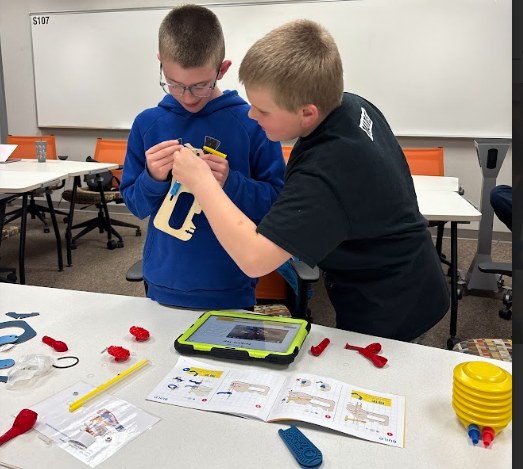
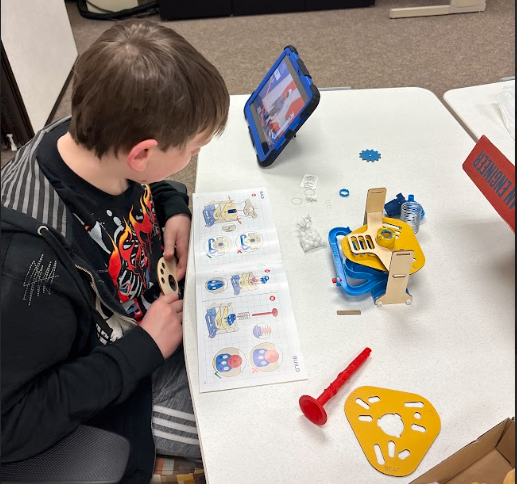
To put theory into practice, each youth selected an engineering kit from CrunchLabs. These kits challenged them to:
- Follow complex technical schematics.
- Understand mechanical advantage and gear ratios.
- Problem-solve when the final product didn’t function quite as expected on the first try.
Looking Forward: Why It Matters
Whether these students want to become NASA engineers or tech-savvy entrepreneurs, these meetings are about building a “Growth Mindset.” In 4-H STEM, we don’t just teach kids how to build robots; we teach them how to think through a problem, work in a team, and realize that “failure” is just the first step in the engineering design process.
Do you have a skill, career path, or passion you’d love to share with young people? Washington County 4‑H is always seeking adults who enjoy working with youth, want to inspire the next generation, or simply care about helping young people discover their spark.
If that sounds like you, please contact Kelly Dione, Washington County 4‑H Educator, at Kelly.Dione@wisc.edu or 262‑335‑4799—and come volunteer with us!